
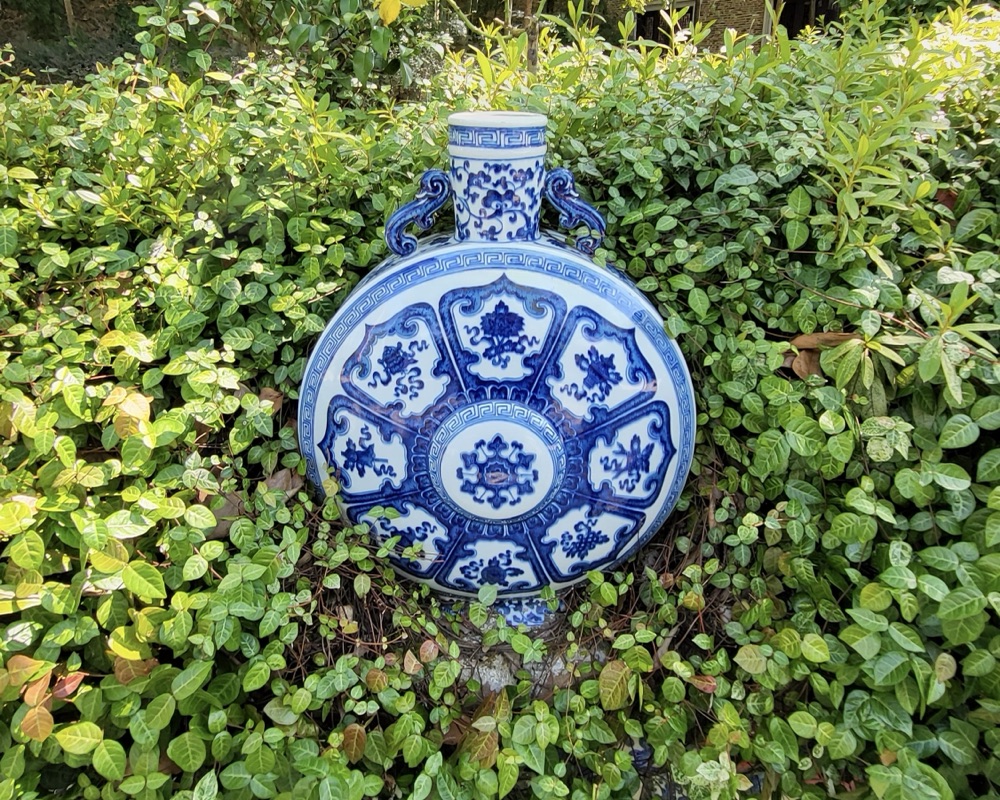
We were getting ready to head back to Singapore for good after three years in Shanghai, and there was still one place we had been meaning to visit — Jingdezhen 景德镇!
One of the hub’s Chinese colleagues was originally from Jingdezhen and had been talking about her hometown for the longest time. We had heard so much about it that we knew we had to make the trip before returning to Singapore. If not now, then when? 😂
So we packed our bags, rented a car and drove six hours from Shanghai to Jingdezhen for a little 4D3N weekend adventure.
Known as China’s porcelain capital, Jingdezhen is a city steeped in ceramic history, where centuries-old craftsmanship meets modern creativity. From traditional kilns and intricate porcelain to pottery workshops, charming streets and delicious local food, there was so much to discover.
Looking back, I’m so glad we made this trip before leaving China. It was the perfect little getaway to end our three years there, and a lovely reminder of how much more there was to explore in a country we had called home. ❤️
Here’s our 4D3N Jingdezhen travel diary, filled with porcelain, food, culture and a few shopping regrets along the way! 😂
Day 1 — The Journey to Jingdezhen

We drove from Shanghai to Jingdezhen, and it took us a good six hours! There are now direct trains from Shanghai to Jingdezhen, with the fastest services taking around 3 hours 12 minutes, depending on the train. But I’m glad we drove because we got to enjoy the beautiful scenery along the way.
We passed through the Huangshan 黄山 area, with its lush green mountains stretching into the distance. It was such a lovely change from the city scenery in Shanghai.


Finally, we arrived at our accommodation, which was an attraction in itself! It was an old-style house with a courtyard, a pond and a lovely pavilion. The whole place had such a peaceful, traditional feel to it — the perfect spot to slow down and unwind after a long drive.


For dinner, we headed to 寻味三宝, a restaurant serving Jiangxi cuisine (赣菜). Jiangxi food is known for its bold, savoury flavours, with chilli featuring quite prominently in many dishes. The restaurant focuses on local ingredients and traditional, home-style cooking, making it a good place to experience the region’s food culture.
After such a long journey, we were exhausted, so we called it a night and went back to rest.
Day 2 — Discovering the Art of Chinese Porcelain

We started the morning with breakfast at our accommodation. It was a simple spread of noodles with pickled vegetables, eggs and fruit before we set off for our first stop of the day: 古窑民俗博览区 (Ancient Kiln Folk Customs Museum).

Jingdezhen is often called China’s porcelain capital, and for good reason. It has been producing ceramics for more than a thousand years, and its porcelain has played an important role in Chinese craftsmanship and trade.

The museum is a great place to learn about this heritage. Rather than being just a conventional museum filled with exhibits, it brings traditional porcelain-making to life through historical kilns, workshops and demonstrations by skilled craftspeople.
One of the most fascinating parts was watching the artisans at work. There is so much skill and patience involved in turning a simple piece of clay into something beautiful.
We learnt about several traditional techniques, too.
青花瓷 — Blue-and-white porcelain

This is probably the most recognisable style of Chinese porcelain, with delicate blue patterns painted against a white background. The blue pigment is applied to the unglazed porcelain body before a transparent glaze is added and the piece is fired at a high temperature. Jingdezhen developed a mature blue-and-white porcelain tradition during the Yuan dynasty, and the style later became famous around the world.
We saw beautiful pieces for sale at the museum, but some were certainly not cheap! One set cost around S$570. 🤯 It really made me appreciate how much craftsmanship goes into these pieces.
青花玲珑瓷 — Blue-and-white openwork porcelain

Another beautiful technique is 青花玲珑瓷. The translucent effect is created by carving tiny openings into the porcelain body and filling them with a special glaze before firing. When light shines through these areas, they appear almost glass-like.
The combination of blue-and-white decoration and delicate translucent details makes this style particularly striking.
粉彩扒花 — Famille rose porcelain with carved decoration

We also learnt about 扒花, a decorative technique associated with 粉彩 porcelain. The artisan uses a fine, needle-like tool to incise delicate patterns into a coloured surface, creating intricate textures and details.
I found this particularly interesting because the finished pieces reminded me of the colourful, intricately decorated tableware often associated with Peranakan dining traditions.
What also fascinated me was the role of raw materials in Jingdezhen’s porcelain-making history. The region is known for its high-quality porcelain stone and kaolin, a type of clay used in porcelain production. The combination of these materials, together with generations of accumulated knowledge and specialised techniques, helped Jingdezhen develop its distinctive porcelain tradition.
However, these natural resources are not unlimited. The history of porcelain-making here is also a reminder of how valuable these materials are and why they need to be managed carefully.

We then visited the historic kilns, including the famous Zhen kiln. This traditional, egg-shaped wood-fired kiln was reconstructed and successfully fired again in 2009. It even holds a Guinness World Records title for the largest wood-fired ceramic kiln, measuring 260.03 cubic metres!

It’s quite amazing to think about the amount of wood, heat and human labour required to fire thousands of ceramic pieces in a single session.
Lunch at 世外陶源


After our museum visit, we headed to 世外陶源 for lunch. This restaurant serves Jiangxi cuisine, with dishes featuring local ingredients and hearty, home-style flavours. As with much of Jiangxi cooking, you can expect savoury dishes and a little heat from the chilli.


There was also a pottery-making area here, but we decided not to try it because we had another pottery experience planned for later in the day.

Instead, we browsed the shop, which was filled with lovely teacups and tableware. Honestly, in a city like Jingdezhen, it is hard not to be tempted by all the beautiful ceramics!
A Pottery-Making Experience

After lunch, we headed back towards the main area of Jingdezhen for our own pottery-making session.


It was a lovely way to experience the city’s ceramic culture beyond simply looking at finished pieces. There is something special about getting hands-on and trying the craft yourself, especially after seeing how much skill goes into the work of the artisans.
An Evening Stroll at the Night Market

We ended the day with a walk around the night market, browsing the stalls and sampling some food along the way.


After a full day of discovering porcelain, learning about traditional craftsmanship and trying pottery ourselves, it was a relaxed way to wind down the evening.
Day 3 — Pottery Shopping and the Imperial Kiln

We started the morning with noodles and a local breakfast specialty called 油条包麻糍, together with hard-boiled eggs and fruit.
油条包麻糍 is a popular snack from Jiangxi, particularly associated with the northeastern part of the province. It is essentially a crispy, golden fried dough stick wrapped around soft, chewy glutinous rice cake, which is coated in a mixture of sesame seeds and sugar.
You get a lovely combination of textures — crispy on the outside, soft and chewy on the inside, with a sweet, nutty flavour from the sesame. It’s such a simple combination, but it works so well! Definitely something worth trying when you’re in Jingdezhen.
Shopping for Pottery at 雕塑瓷厂 and 明清园

After breakfast, we headed to 景德镇雕塑瓷厂 and 明清园.
雕塑瓷厂 was originally established as a ceramics factory in 1956. Over the years, it evolved into a creative hub for ceramic artists, craftspeople and independent pottery studios. Within the grounds is 明清园, a traditional-style complex featuring restored architectural elements from old Ming and Qing buildings, along with workshops, galleries and shops.
And when I say there are lots of pottery shops here, I really mean LOTS!

Plates, cups, jugs, teapots, tea sets, decorative pieces — you name it, they have it! There were so many different styles, from traditional blue-and-white porcelain to more contemporary designs.

It’s the kind of place where you can easily spend hours browsing, especially if you’re someone who loves beautiful tableware as much as I do. I had to remind myself that we still had more places to visit!
Lunch at 三宝别院

By lunchtime, it was time to eat again! We headed to 三宝别院, a restaurant serving local Jingdezhen and Jiangxi-style dishes.
One of the things I loved most about this place was the setting. The restaurant was surrounded by lush green mountains, and there was even a huge pond within the grounds. It felt so peaceful and scenic, making it a lovely place to sit down and enjoy a meal.


I always appreciate restaurants that offer more than just good food. Having such beautiful scenery around us made lunch feel like a little break from sightseeing.
Visiting the Imperial Kiln Museum 御窑厂

Our next stop was 御窑厂, the former imperial kiln complex where porcelain was made specifically for the Chinese imperial court.
The history here goes back to the Ming dynasty, when the imperial kiln was formally established in 1369. It continued producing porcelain through the Qing dynasty until the end of the Qing imperial era in 1911. For more than five centuries, Jingdezhen’s imperial kilns produced porcelain for the emperor and the royal court.
One of the most fascinating things we learnt was what happened to porcelain that failed inspection.
Even though the pieces had been made for the imperial court, not every item passed quality control. Some had flaws in their glaze, colour or finish. These rejected pieces were deliberately destroyed and buried rather than allowed to enter the market.
The reasoning was that imperial porcelain was specially made for the emperor, and rejected pieces should not circulate outside the imperial system. The archaeological discoveries here provide evidence of how these discarded pieces were handled.
We walked around the grounds, which were much larger than I had expected. There was so much history packed into this area.

One of the landmarks was a pagoda-like building called 龙珠阁 (Longzhu Pavilion). The current structure was rebuilt in 1990 in a traditional Chinese architectural style. Inside, we saw a miniature model recreating the former imperial kiln complex during the Qing dynasty, complete with workshops, kilns and other buildings that showed how the site once operated. The model itself was made from ceramic components — such a fitting way to tell the story of Jingdezhen!

We then went underground to view the archaeological remains and the piles of broken porcelain pieces.


Seeing these fragments in person made the history feel much more tangible. They were not simply random broken pottery; many were remnants of pieces that had been rejected during the imperial production process centuries ago.
Inside the Imperial Kiln Museum

We continued to the museum, whose striking architecture resembles a series of traditional kilns. 🤣
The design is such a clever nod to the city’s porcelain-making heritage. Rather than looking like a conventional museum, the building itself feels connected to the history it houses.

Inside, we saw exhibits explaining the techniques and craftsmanship behind imperial porcelain. One particularly memorable display was a large, defective ceramic vat that had been broken and then pieced back together so visitors could see what it would have looked like when intact.

It was fascinating to see how even something as ordinary as a storage vat could be part of this history. And considering the strict standards imposed on imperial porcelain, it’s easy to imagine just how much work went into producing pieces that met the court’s expectations.
Modern Porcelain at 陶溪川文创街区
After spending the afternoon exploring the city’s imperial past, we headed to 陶溪川文创街区 to see a more contemporary side of Jingdezhen’s ceramic scene, and for dinner as well.
This creative district brings together modern pottery, independent designers, studios and shops. It was interesting to see how porcelain-making continues to evolve, with artists experimenting with different shapes, colours and styles while still drawing on the city’s long ceramic tradition.

And then we came across a shop called 玉柏.
Major regret. 😂
We bought things. Of course we did.

Among our purchases was a beautiful 玲珑 porcelain tableware set for around S$380. It was so delicate and lovely that we couldn’t resist bringing it home.

The only problem? We don’t really dare to use it! 🤣
After seeing all the craftsmanship that goes into making Jingdezhen porcelain, I think we became even more conscious of how precious these pieces are. But surely beautiful tableware is meant to be used, right? Maybe one day I’ll finally take the set out of storage and enjoy it properly.
And that brings us to the end of our third day in Jingdezhen — a day filled with local food, pottery shopping, imperial history and, naturally, more porcelain purchases than we probably needed!
Day 4 — Back to Shanghai
It’s time to pack up and head back to Shanghai!
Our Jingdezhen trip had been such a lovely mix of food, history, beautiful scenery and hands-on experiences. We came away with a better appreciation of China’s porcelain-making heritage, plenty of photographs and, of course, a few more pieces of tableware to add to our collection.
If you love ceramics, traditional craftsmanship or simply enjoy exploring places with a strong cultural identity, Jingdezhen is well worth visiting. Just be prepared to leave with more porcelain than you planned to buy! 😂


Leave a Reply