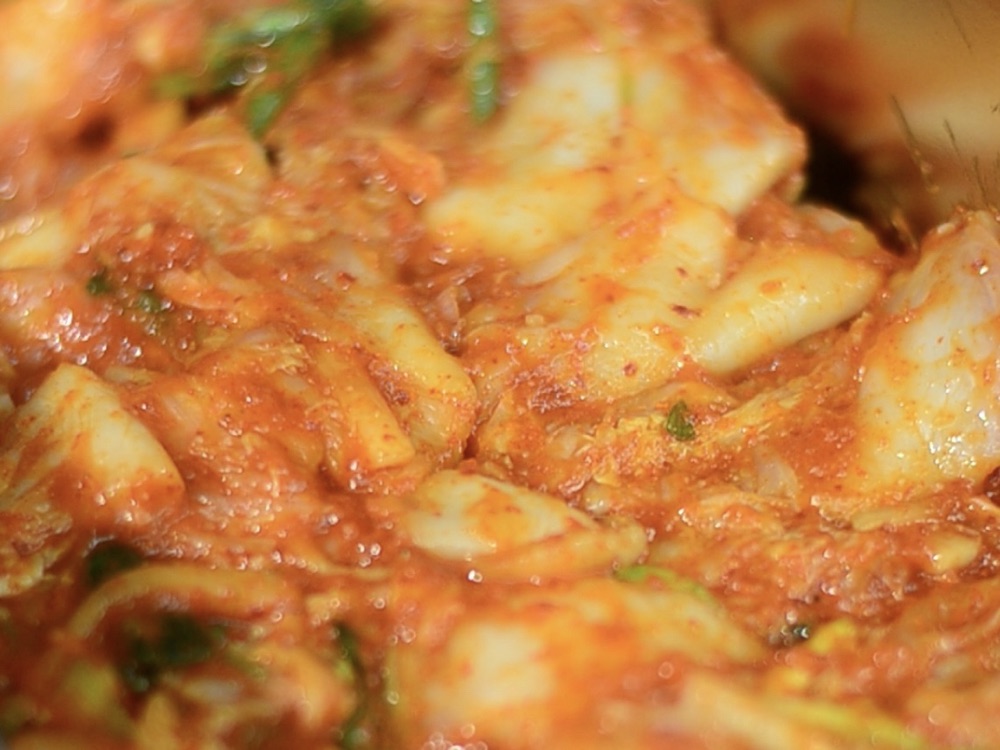
Just like my ever-evolving Ngoh Hiang recipe, my kimchi recipe is always changing too. I get bored making the same old thing, so I love switching things up and trying something new.
Today’s batch is a little different from the last—this time, I used gochugaru from Seoul’s Namdaemun Market and finally added fresh pear (a crisp and juicy Chinese namshui pear!). The result? A refreshing, vibrant kimchi that’s so tasty, you can enjoy it fresh even before fermentation.
Give it a try — it’s DELICIOUS!
Ingredients
Vegetables:
2 heads napa cabbage (or wongbok)
6 stalks spring onions, cut into 5cm pieces
1 cup radish, julienned
Kimchi Paste (to blend):
1 pear, peeled and chopped
1 onion, chopped
8 cloves garlic, minced
1 tbsp cooked rice
2 tbsp Korean anchovy sauce
To mix into paste:
½ cup gochugaru
1 tbsp fermented shrimp (saeujeot)
2 tbsp plum syrup
Method
1. Salt the Cabbage (refer here!)
• Cut napa cabbage into bite-sized pieces.
• Soak in salt water overnight.
2. Rinse the Cabbage
• Rinse thoroughly 2–3 times to remove excess salt.
• Drain well in a colander.
3. Prepare the Paste
• In a blender, blend: pear, onion, garlic, rice, and fish sauce until smooth.
4. Combine Everything
• In a large bowl, combine spring onions, julienned radish, gochugaru, blended paste, fermented shrimp, and plum syrup until well combined.
• Add drained napa cabbage.
• Wear gloves and gently massage the paste into the vegetables until everything is well coated.
5. Pack and Ferment
• Pack the kimchi tightly into a clean container or jar, pressing out any air pockets.
• Use a vacuum-sealed container like FreshPreserve to help lock in freshness and reduce odours.
• Leave the container at room temperature for 1–2 days to kick-start fermentation, then transfer to the fridge.
Taste after 2 days and enjoy! The flavour deepens the longer it ferments. Best eaten after fermenting for 2–3 weeks for optimal crunch and tang.

 A Singaporean Mum
Leave a comment